Review by Scribe After Five
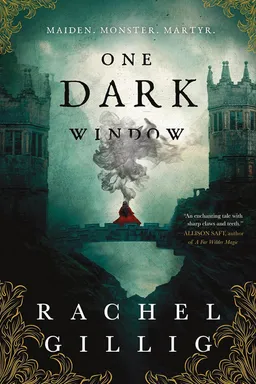
Oct 14I find a lot of my book recs through social media, and this duology kept slipping into my feed — gothic art, mist-drenched quotes, whispers of romance and ruin. By September, I was lining up my October reads, and when I spotted One Dark Window at the bookstore, it was an instant grab. The cover, the premise, the eerie promise — everything about it screamed “Fall read.”
I try not to build expectations before reading. I do a little research, enough to spark curiosity, but stop myself once fan art starts flooding my timeline. I want to visualize the world and its characters on my own terms. So, I went in mostly blind — and within a few chapters, I was hooked.
This book scratched every gothic fantasy itch I had. Rachel Gillig writes with such talent for atmosphere — her prose is lyrical, sharp, and hauntingly vivid. The imagery is so rich that I swear, while reading in my bedroom, I half expected the mist to start curling around my feet. The tone mirrors the emotional gravity of Blunder itself, and the sorrow and secrecy each character carries.
Everything about this story fits together like an intricate puzzle: the worldbuilding, the characters, the plot, the prose — every piece connects seamlessly. The pacing felt smooth and immersive; if there were uneven moments, I was too consumed to notice.
One quote that stuck with me:
“He came for the girl... and got the monster instead.”
It perfectly captures Elspeth’s struggle — the darkness she’s hidden for eleven years. Pulled out of context, it also speaks to how women are often celebrated on the surface but vilified once we show depth, rage, or imperfection. It’s such a chilling, empowering line.
Elspeth herself lived rent-free in my head. Her infection, her secrecy, her slow dance with The Nightmare — I was fascinated by how Gillig explored that dynamic. Their relationship is bizarrely alive: equal parts tense, humorous, and tragic. At times, I found Elspeth’s hesitancy frustrating, but her evolution — learning to weaponize The Nightmare instead of fearing it — was deeply satisfying. The mental tug-of-war between them felt like watching two sides of the same soul fight for control.
I finished this book in one sitting. That’s how immersive it was. Every time I looked up, I half expected the mist outside Blunder to have crept into my own world.
Ravyn as the love interest honestly surprised me. Gillig’s worldbuilding had me so enthralled that when he appeared, I didn’t immediately clock his importance — but once I did, every scene with him commanded attention. The reveal of the Shepherd King genuinely floored me. I had to put the book down and breathe. The duality of The Nightmare and the Shepherd King hit like a thunderclap, making me flip back pages just to absorb it all.
And that ending? A perfect blend of chaos, heartbreak, and intrigue. The cliffhanger hurt — in the best way. I had to pick up book two immediately.
I also loved the shift in POVs. Multiple perspectives always make a world feel fuller, and Gillig uses it beautifully. Seeing through each character’s emotional lens made it hard to hate anyone. They’re all driven by power, greed, grief, or love — often all at once — and the way each Providence Card mirrors its holder is masterful.
The romance between Elspeth and Ravyn is subtle, grounded, and tender. It’s not all-consuming; it’s built on trust, duty, and the shared desire to survive. Their intimacy never feels performative — it’s quiet, intentional, and protective. It’s the kind of love that says, “I’ll make this safe so you can live peacefully after I’m gone.” It’s understated and incredibly moving.
One line that gutted me:
“Had I known they’d be the last words I’d say to him aloud, I might have chosen them differently.”
Placed near the end, it filled me with dread about Ravyn’s fate. That’s when I realized how real Elspeth’s feelings had become — and how deeply this story had its hooks in me.
By the end, I was in love with everything: the world’s texture, the logic of the magic system, the rich gothic aesthetic. The Mist as a sentient, consuming force is such a brilliant touch — what’s a gothic world without the mist anyway? The Providence Cards, their riddles, and the cost of their power gave the story a mythic edge that made it both intelligent and enchanting.
One Dark Window was the perfect October read — immersive, eerie, and beautifully crafted. The prose sings, the magic system is clever, and the emotional beats land exactly where they should. It’s the kind of book that makes you want to linger in its shadows a little longer… or at least have your own Destrier to carry you through them.
Song choice: Dinner & Diatribes by Hozier
I find a lot of my book recs through social media, and this duology kept slipping into my feed — gothic art, mist-drenched quotes, whispers of romance and ruin. By September, I was lining up my October reads, and when I spotted One Dark Window at the bookstore, it was an instant grab. The cover, the premise, the eerie promise — everything about it screamed “Fall read.”
I try not to build expectations before reading. I do a little research, enough to spark curiosity, but stop myself once fan art starts flooding my timeline. I want to visualize the world and its characters on my own terms. So, I went in mostly blind — and within a few chapters, I was hooked.
This book scratched every gothic fantasy itch I had. Rachel Gillig writes with such talent for atmosphere — her prose is lyrical, sharp, and hauntingly vivid. The imagery is so rich that I swear, while reading in my bedroom, I half expected the mist to start curling around my feet. The tone mirrors the emotional gravity of Blunder itself, and the sorrow and secrecy each character carries.
Everything about this story fits together like an intricate puzzle: the worldbuilding, the characters, the plot, the prose — every piece connects seamlessly. The pacing felt smooth and immersive; if there were uneven moments, I was too consumed to notice.
One quote that stuck with me:
“He came for the girl... and got the monster instead.”
It perfectly captures Elspeth’s struggle — the darkness she’s hidden for eleven years. Pulled out of context, it also speaks to how women are often celebrated on the surface but vilified once we show depth, rage, or imperfection. It’s such a chilling, empowering line.
Elspeth herself lived rent-free in my head. Her infection, her secrecy, her slow dance with The Nightmare — I was fascinated by how Gillig explored that dynamic. Their relationship is bizarrely alive: equal parts tense, humorous, and tragic. At times, I found Elspeth’s hesitancy frustrating, but her evolution — learning to weaponize The Nightmare instead of fearing it — was deeply satisfying. The mental tug-of-war between them felt like watching two sides of the same soul fight for control.
I finished this book in one sitting. That’s how immersive it was. Every time I looked up, I half expected the mist outside Blunder to have crept into my own world.
Ravyn as the love interest honestly surprised me. Gillig’s worldbuilding had me so enthralled that when he appeared, I didn’t immediately clock his importance — but once I did, every scene with him commanded attention. The reveal of the Shepherd King genuinely floored me. I had to put the book down and breathe. The duality of The Nightmare and the Shepherd King hit like a thunderclap, making me flip back pages just to absorb it all.
And that ending? A perfect blend of chaos, heartbreak, and intrigue. The cliffhanger hurt — in the best way. I had to pick up book two immediately.
I also loved the shift in POVs. Multiple perspectives always make a world feel fuller, and Gillig uses it beautifully. Seeing through each character’s emotional lens made it hard to hate anyone. They’re all driven by power, greed, grief, or love — often all at once — and the way each Providence Card mirrors its holder is masterful.
The romance between Elspeth and Ravyn is subtle, grounded, and tender. It’s not all-consuming; it’s built on trust, duty, and the shared desire to survive. Their intimacy never feels performative — it’s quiet, intentional, and protective. It’s the kind of love that says, “I’ll make this safe so you can live peacefully after I’m gone.” It’s understated and incredibly moving.
One line that gutted me:
“Had I known they’d be the last words I’d say to him aloud, I might have chosen them differently.”
Placed near the end, it filled me with dread about Ravyn’s fate. That’s when I realized how real Elspeth’s feelings had become — and how deeply this story had its hooks in me.
By the end, I was in love with everything: the world’s texture, the logic of the magic system, the rich gothic aesthetic. The Mist as a sentient, consuming force is such a brilliant touch — what’s a gothic world without the mist anyway? The Providence Cards, their riddles, and the cost of their power gave the story a mythic edge that made it both intelligent and enchanting.
One Dark Window was the perfect October read — immersive, eerie, and beautifully crafted. The prose sings, the magic system is clever, and the emotional beats land exactly where they should. It’s the kind of book that makes you want to linger in its shadows a little longer… or at least have your own Destrier to carry you through them.
Song choice: Dinner & Diatribes by Hozier